

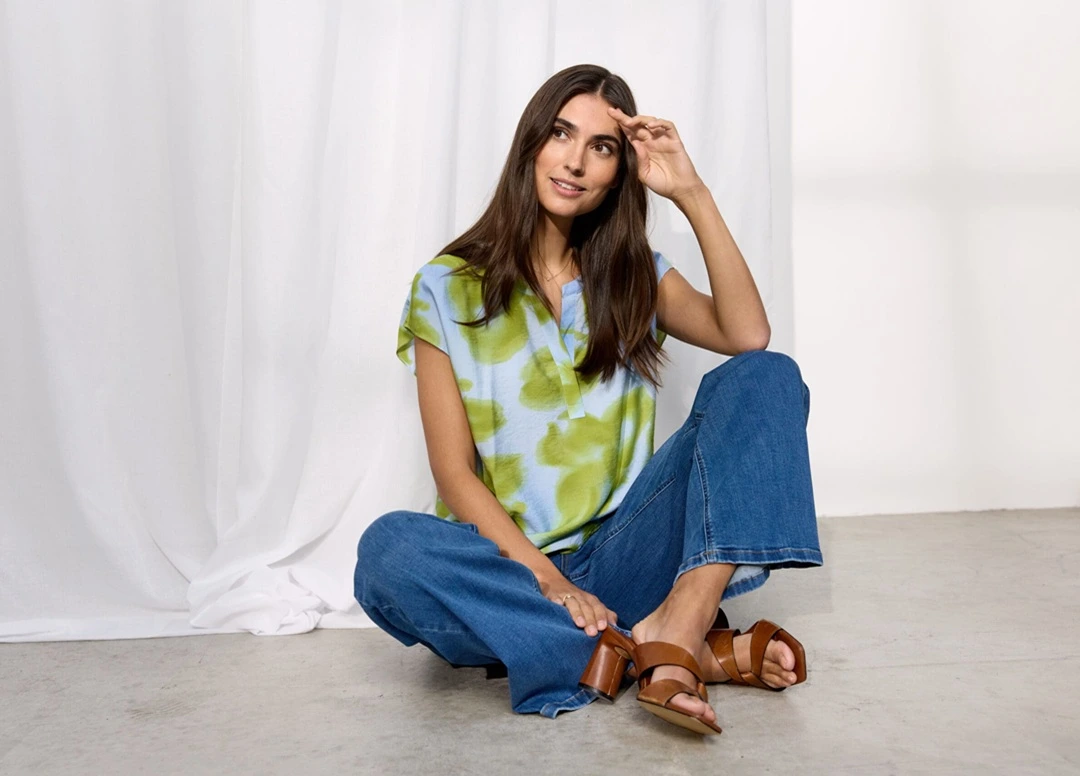
Buying jeans or trousers should be simple. In reality, it often turns into trying on five pairs, liking two, then leaving with none because the waist sits oddly, the leg feels wrong, or everything looks fine until you take a step.
The good news is this: once you know what to look for, it gets much easier. Not perfect, not scientific, just easier. And you stop blaming your body for a garment that simply is not cut for you.
This guide is about finding pairs that sit well, look right, and do not demand constant adjusting.
Start With the Waistband, Not the Leg
Most problems start at the waist. If the waistband is fighting you, the rest of the outfit will feel slightly off all day.
A helpful way to think about rise is where you want the waistband to sit when you are relaxed.
A higher rise can feel secure and gives a clean line under tops and knits. A mid-rise is often the easiest default. A lower rise can feel lighter, but only if it stays in place without digging in.
Here is a simple check that tells the truth. Fasten them, then take a comfortable breath. If you feel pressure straight away, that pair will annoy you later. If it sits flat and you forget about it, you are on the right track.
The Leg Shape Changes the Whole Outfit
Jeans and trousers can be the same size, the same colour, even the same fabric, and still look completely different depending on the leg.
A slim leg reads neat and close. A straight leg feels balanced and easy to style. A wide leg can look sharp and relaxed at the same time, but length matters. A tapered leg often feels comfortable through the thigh, then narrows gently, which suits days when you want a softer shape without going baggy.
If you are unsure what suits you, start with the pair you wear most now and name what you like about it. Is it the leg? The rise? The fabric? That one detail usually points you in the right direction.
Fabric Is the Difference Between Looks Good and Wears Well
Fit is not just shape. Fabric plays a big part. Stretch can be brilliant when it feels supportive and bounces back into place. Some stretch denim feels great in the fitting room, then gets loose by lunchtime. That is not you. That is the fabric.
More structured denim holds its shape better, but it can feel stiff if the cut is not right. Softer blends can be very comfortable for everyday wear, but it is worth checking that the knee does not bag out after a few hours.
A simple rule that helps: if it is comfortable on your skin and you forget about it quickly, it is more likely to be a keeper.
Length Matters More Than People Think
Length seems small until it makes every outfit easier. An ankle length pair can be a gift, especially with trainers, loafers, or boots. A full-length pair can look polished, but you want it to skim the shoe rather than pool on the ground. Cropped styles are great, but only if the crop hits in a flattering spot for you. Some crops land at the widest part of the calf, and that can throw the balance even when the rest is perfect.
If you switch shoes often, aim for a length that works with more than one option. It saves a lot of second guessing later.
How To Tell If the Size Is Right
Sizing varies from brand to brand. That is normal. The number on the label is not the goal. The way it sits is.
When you are trying on jeans or trousers, do these quick checks:
- Sit down. If the waistband cuts in sharply, it will not get better.
- Walk a few steps. If the fabric pulls across the hips or thighs, it is too tight for real life.
- Check the back waist. If it gapes, you may need a different cut rather than a different size.
- Look at the knee and seat area. If there is odd bunching, the shape is not working, even if the waist fits.
One more that is surprisingly useful: put your phone in the pocket. If it immediately drags everything down or sits strangely, that pocket placement will annoy you every time you wear them.
Jeans Versus Trousers, And What Each Does Best
Jeans are brilliant when you want an outfit to feel casual without looking scruffy. They ground softer tops and knitwear, and they are hard to overthink.
Trousers can do something jeans often cannot. They make you look finished faster. A good trouser with a simple top can look considered with very little effort, especially when the waist is comfortable and the leg falls cleanly.
If you are building a small, useful wardrobe, it helps to have one pair of jeans you rely on and one pair of trousers that feel just as comfortable. That combination covers a lot of days.
Styling Fixes That Make a Pair Work Harder
Sometimes the jeans or trousers are right, but the outfit around them needs one small adjustment.
A front tuck can change the balance in seconds. A belt can stop the waistband shifting as you move. A more fitted top can make a wide leg trouser look intentional. A softer knit can take the edge off a sharper trouser and make it feel more relaxed.
If you often feel unsure in trousers, try them with a simple knit and a tidy shoe first. That pairing tends to settle the look.
The Sign You Have Found the Right Pair
The best jeans and trousers do not shout. They sit properly. You stop adjusting. You stop thinking about them. You just get on with your day.
That is the whole aim. Comfort and confidence, without the constant fuss.


